December 13, 2011

But Can It Do Any Calculations?


If the last post dealt with the year 1987, this one deals with the year 1991.
What did I do in the mean time?
I finished High school after the 11th grade (this is not due to any particular brilliance, that was the law in Quebec Canada at the time), and studied Physics for one year at the Technion. At the end of that year I met my girlfriend.
Then I went to serve my country in the IDF (I served in the Nahal Brigade, which was not only a brigade then, but more on that maybe some other time...).
So in 1991 I was nearing the end of my military service, and my girlfriend who was also a soldier at the time, served for the IDF spokesperson. In 1991 this was high honor indeed because in the Gulf War, the IDF spokesman (that was their name at the time) pretty much ran the country.
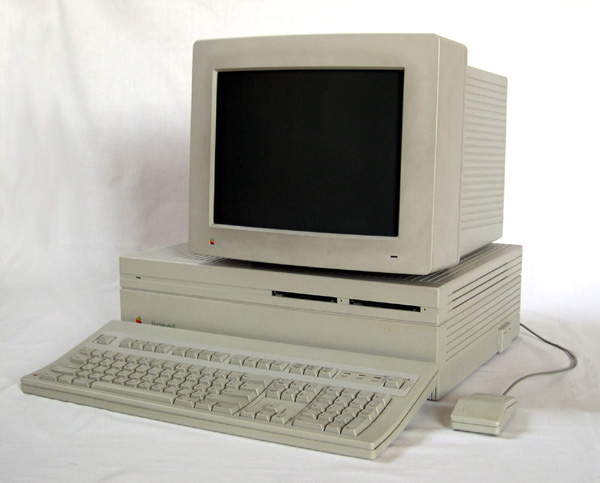
Anyway, she invited me over to see the latest and greatest computer they had - the Macintosh II. They used to print an English language newspaper than, depicting the IDF in a positive light. They used their Macs for Desktop Publishing, and it could really do pretty amazing things back then (especially compared to the PCs, that could barely print one shabby font of Hebrew on Dot Matrix printers).
It also had a screen saver - flying toasters.
I was really impressed, but being a science buff I had to ask - Can it do any calculations? it must be able to print really cool graphs of functions or something?!
Try as we might, we did not find any such piece of software on the machine. My girlfriend was a bit annoyed that I kept asking that. I'm afraid this was not the first time that I annoyed her, nor the last time.

December 6, 2011

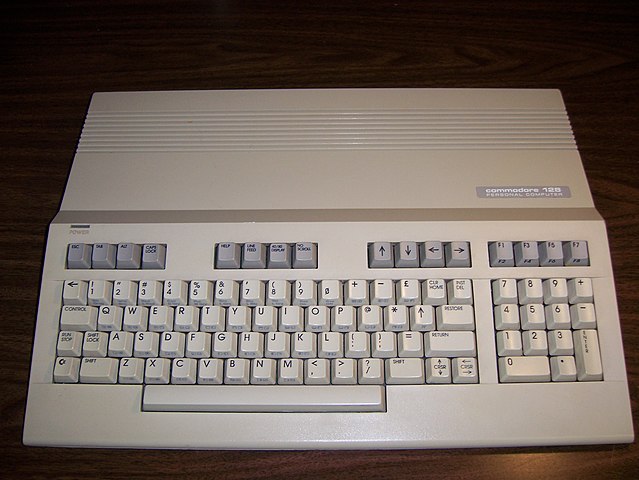
Interlude - My Commodore 128


While I do not intend to cover my entire history with personal computers when speaking about Steven Jobs and Apple Computer (mainly because I want to cover some of it when discussing other famous tech people), it is important to mention some things just now:
  • I had a Sinclair Spectrum from late 1983, until very early in 1985. Then my entire family moved to Canada, and I did not own a computer until late 1986.
  • In late 1986, I had a Commodore 128, for a few months, and then I moved back to Israel in August 1987 (the rest of my family returned a year later).
  • I did not own a copmuter from late 1987 till 1995 (except for several months during which I had a commodore Amiga, great computer, but it was outdated by then).
  • There are many reasons why I did not have a computer for such a long time, but the two main ones are my military service in the IDF, and lack of money during my studies for BA at the Hebrew University.
There is really not that much to say about the Commodore 128. It was a fine computer. The rest of my friends, though interested in many things scientific and technical, did not really care that much about computers, asnd so, I did not use it that much.
However, there is one impotant thing I should mention: during almost my entire life, my handwriting was illegible. Even as early as Grade 4, my mother had to use a typewriter to write my term papers (details may or may not follow in some future post). My Commodore 128, was the first computer on which I used a modern (well semi modern, we are talking CP/M here) word processor.
I never looked back...

November 29, 2011

The Greatest Feature of the LISA

I just realized that as I'm writing this 'biography of Steven Jobs from my side' I'm sort of going through my personal history with personal computers.
Anyway, I think I saw the LISA in Israel in the spring of 1983, that is a few months before I had my own personal computer.
At the time going to industry fairs to see computers was one of the best ways to interact with them.
So I was hanging out at this fair, like I did many times before. That is me and a bunch of my friends were asking sales reps all kinds of questions, and watching product demonstrations.
It was basically us, say two ogr three kids from the Seventh Grade, and several dozens of 'serious business people'.
I think none of the sales reps had any hope that we would buy these computers (the LISA sold for something like 10,000 dollars at the time...), but in our defense I could say that the reps liked talking to us better than to the 'srious business people' because:

1) We were really excited about their computers.
and
2) We sort of understood them, which was not true for the 'srious business people'.

Anyway, I was watching this gray suited woman (highly unusual in Israel at the time, because of the suit, not because of the woman), giving a demonstration of the LISA. All the 'Serious Business People' were excited only about the fact that there was this garbage can, and you could throw your files into it (that's right...).
I distinctly recall her being slightly exasperated (after all she was trying to sell a 10,000 dollar Machine), when she said: 'look, the garbage can is NOT the LISA's greatest feature'.
I don't know if she was right though. After all it is all that is left of the LISA.


November 22, 2011

Apple ][ Clone Impressions

I know that the Apple I was first manufactured in 1976, but we didn't get any personal computers in Israel till 1982, or maybe late 1981. At least no one I knew got them before that.
I got my first personal computer when I was nearly 14, in the summer of 1984. It was a ZX Spectrum. The story of my personal computer is interesting, and maybe I'll tell it some other time, but today I want to talk about the computer my Friend Eldar Fischer got in early 1983. That was an Apple ][ clone.
If you followed the link above, there is quite a list of these clones, not sure which one he had, or even if it is on this list, but it did say 'Pasania' whenever you turned it on.
Eldar, who is now a professor of Computer Science at the Technion, was really into computer programming even when we were both in grade 7. He sat with another kid from our class for nights on end programming their own versions of games such as Moon Landing.
The Apple ][ (and all of its clones) had a Graphics Mode (actually it had two Graphics modes), and it had, somewhere in the recesses of its RAM memory, something called the 'Shape Table'. The only way to access that Shape Table was through direct changing of memory addresses (the POKE command in BASIC, not related to Facebook).
Eldar and that other kid made their own Shape Table BASIC program that took graphic instructions and made them into something that really created the shapes they drew!
Sure it was a little buggy, but we had our Lunar Lander!
What am I trying to say with all this?
That the first and most lasting effect that Steven Jobs had on my life, and I guess on the life of many other Israelis, had to do with a buggy program written on a buggy clone.
Man that was powerful, but no way was it as well designed as say the Mac!
PS I also tried programming with Eldar. We worked on something called Three Dimensional Monopoly. Nothing came of it, but I'm still interested in the project, any takers?


November 15, 2011

Steven Jobs - The Book Review

Steven Job Died, and for a (not so short) while, it seemed like everyone had something to say about the matter.
Naturally I wanted to say something about it too, and this blog seemed like the perfect platform to say it.
But then I heard that there was this 600 page authorized biography, so naturally, I had to read it.
So here's what I though of it:
First, I think it's important to state how you read a book (especially if it's an Ebook), so I read this one on the Kindle software. That would be both on my Iphone kindle, and on Kindle for the cloud, which is the only version that works on my Linux PC.
I bet some of the readers can infer my opinions about Steven Jobs and the book from these facts alone.
Anyway, I thought it was a really interesting book. As an aspiring writer, there is enough stuff in there to write something like thirty novels. Just as an example, there is a story there about a Xerox employee who insisted on NOT telling Jobs about all the worderful ideas they had in the late 1970s. I bet her life story is novel worthy, and really, there is just so MUCH in this book.
Another good thing about the book is how it tidied everything I knew about Steven Jobs. I mean the guy was a feature in my life since at least 1983, when one of my friends got an Apple II clone, but the book really explained how eveything worked from his side (Apple I, Apple ][, LISA, Mac, NeXT etc.) now I think I really know this guy's life story.
Also, I think Walter Isaacson (the writer of the book) really got a rounded view of Jobs, by talking to people like Bill gates, and Eric Schmidt and Steven Wozniak. I'm sure some day when someone sits down to write a biography of say Schmidt, this will be really useful, but even now, we get a picture of silicon valley that goes way beyond Jobs.
So isn't there anything negative I can say about his book? I think its down side is actually the down side of almost any biography. We get a clear picture of Jobs, but not of the effects of the things that he did downstream (such as apple II clones we had in Israel in the early 1980s, I'm sure he was not a fan!).
But even this minor gripe is a good thing. It lets me get in and give you my two cents!
Starting next week.

Steven Jobs biography


November 8, 2011

It's Not About Greed

I'm going back to late 1993 now, and my second year as an undergrad at the Hebrew University in Jerusalem.
I studied Economics and Mathematics back in the day, and because of the odd nature of the aforementioned university, that meant I had to study in two campuses. Luckily there were a few other students on that program and so I hitched rides with one of them who had a car.
Whenever we got to Mount Scopus (Economics) he used to say: "I don't like the smell here. It smells like greed."
Funny thing, the guy is now a professor of Economics. but not greedy.
Anyway, since at least the 1970s there have been a profession called Business Administration in most US colleges and universities. The aim of this endeavor is explicitly making money.
The interesting fact is that many US undergrads went on to become millionaires since then, but most of them were computer scientists. Same thing happened in Israel on a smaller scale.
I think people like Bill gates, or even Steve Jobs are greedy to an extent, but that is not the prime motivator of their actions. I think the prime motivator was creating something useful or nice (yes, I even think that of Bill Gates). Money was just a (huge) byproduct of that.
So in the next few weeks I plan to air my personal views on at least four people: Steve Jobs, Bill gates, Eric Schmidt, and Jeff Bezos.
See ya'll next week!

November 1, 2011

Look at this TED lecture - seriuosly

I know I said this blog will move on to discuss matters having to do with technology and computer science, and it will, starting next week, I promise!
But for this week I've watched this really amazing TED lecture, and it ties so nicely with everything discussed in this blog in the past few weeks, that I have to recommend it now.
The video is here:
http://www.ted.com/talks/richard_wilkinson.html
And to give you the really short version; for developed economies, growth and GNP per capita are far less important than the equitable distribution within the society.
More equitable distribution lowers crime, improves health, and happiness and many more important life variables.
Now go watch the real lecture!

October 25, 2011

Actually This blog is not Supposed to be about Economics

Since I'm a small Israeli Ebook publisher, I'm not only supposed to have thoughts on matters related directly to Economics, but also on matters having to do with Literature.
That's why I want to talk about Business and Computers for a short while now.
Wait, What?
Yes, I think that the Ebook revolution is a huge deal, not only to book publishing, but also to human civilization as a whole.
The reason I wrote about Economics so far is that I studied economics, but found that Economic Analysis alone does a very poor job at writing books for publishing, at picking up which books to publish, but also at actually marketing and selling the books.
I'm not saying I'm a roaring commercial success, but four years of being a publisher at least taught me a few things that I should NOT do, but more about that later.
For now, that is for the next few weeks, I want to talk about some of the past and present leaders of the Software Industry, because that will lead to talking about Ebooks...

October 21, 2011

Kosher Mexican Food in Beer Sheva

This just occured to me the other day.
While is is very obvious that Tel Aviv is the food capital of Israel, so much so that many Israeli restaurant review sites don't even bother publshing reviews for any other places (which is a subject for a future post maybe), there are many more Mexican/Tortilla places in Beer Sheva, most of them Kosher, and I can't even think of one that exists in Tel Aviv currently.
For example you can chack out this site (if you can read Hebrew), and you will see that this franchise has three branches of Kosher Tortillas in Beer Sheva, and it plans on opening the fourth branch in Hadera (a small city north of Tel Aviv, so smaller and further from Beer Sheva).
Why is that?
You may reply, if you know the food fads of Israel, that Tortillas were a craze in Tel Aviv too three or four years ago, and then most businesses just moved on, but this does not explain why it stuck in Beer Sheva!
The two explanations me and my wife thought of are that cheaper food sells better in Beer Sheva, and that beer Shevans on the average like spicy food better that Tel Avivians. Both may be true, but it still make you wonder...


October 11, 2011

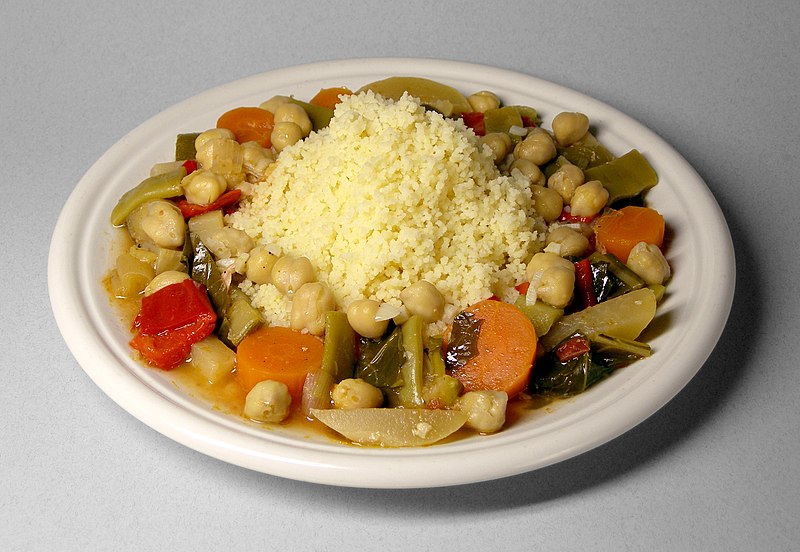
Couscous on Tuesdays


I have another shocking confession to make. I really like Couscous.
Now Couscous being a traditional Morrocan or Tunisian food it is quite easy to find decent (Kosher) Couscous places in Beer Sheva.
The interesting thing is that most of these places, and almost all of the good places serve Couscous mainly on Tuesdays.
I know it is traditional to eat Couscous on Tuesdays (and Friday night, but obviously not Kosher places...)
However, one would think that there would be an economic oportunity here, that some people migt like Couscous on Sunday for instance..
But for some reason this is not happening.
I think this is yet another evidence that economic is inextricably tied to culture, and that cultural traditions sometimes change very slowly despite of economic incentives.

October 4, 2011

Here's Something That Regular Economics Can't Explain

Ok.
This is actually the first idea I've had that made me think that current economic Theory is broken.
Also, before I start, I'm sorry that the only numbers to back me up here are from my own memory, but there are no regular statistics on these subjects.
So here goes:
In 1990 I distinctly remember being a youth councilor in Ashkelon. I was trying to train a group of junior councilors, and the Rabbi of the congregation wanted a session with the energetic youths.
He started the session with a meditation on the subject of Shawarma. it went something like this:
"Shawarma. Think of it. Shawarma. Lusciuos tasty Shawarma, with Tahina, and all you can eat salads. But the pita is too small, and the price just went up from 5 shekel to 6 shekel (about 2.50$ to 3$ at the 1990 exchange rates)..."
This is actually the point. Shawarma in 1990 cost 5 or 6 shekels. today it costs 24 to 30 shekels (7$ to 9$ at current exchange rates). This is a serious climb in the price.
So far, it's hardly shocking. But Sushi prices in Israel actually went down at the same time! from 40 shekel in the early 1990s (about 20$!) to about 24 shekels now (about 7$).
How can this be?
Regular economics cannot explain this, but economies of scale can. It's just that more people eat Sushi in israel now, and fewer people eat Shawarma than in 1990. Still, Shawarma is more popular than Sushi, only the difference is smaller. So competition in one area went way up, and in the other area it went way down.
People don't meditate about Shawarma so much now.

September 27, 2011

Does Democracy Stifle Economic Growth?

Sorry.
This is not my title and not my lecture.
Rather it is the title of a TED lecture by Mr. Yasheng Huang.
If you listen to this lecture, and I highly recommend it, you will be convinced that Democracy does not stifle Economic Growth.
That's a very good thing to be convinced of.
But you will also be convinced (I hope) that Economic Growth comes from an interplay of many factors, and that is a point I have been trying to make for the last few posts.
Only Yasheng Huang does it better.
Go watch, Seriously.

September 20, 2011

International GDP per capita comparisons - a wonderful way to get a headache

Seriously, I thought I understood at least where my country stood as far as international GDP per capita considerations were concerned, at least until I took a serious look at this chart.
This chart compares the GDP per capita of four countries from 1960 to 2009.
The countries are: Israel, UK, France and the US.
Until I looked at the chart, I thought I had it all figured out: we were a developing country, slowly gaining acceptance and status, and improving our GDP, and GDP per capita. One day we will catch up with Europe and the US, and in the past we were much farther away from them then we are now.
Right? wrong!
This chart says that in 1960 UK, Israel and France were all in the same spot! Roughly one half of the US GDP per capita at the time.
Wait, there's more. According to the chart that (1960) was the last time Israel was doing so well at least compared to the UK and France. And these two grew faster than Israel, almost catching up with the US recently.
What is the meaning of this? How can this make sense?
After looking at the chart there are still more questions such as:
Is the UK doing better than France recently? If so is 2009 just a blip? Can blips be really this big?
Why was France doing so much better than the UK in 1980?
Why the same in 1994?
I bet that there are great explanations for all of these questions.
A good starting point is that since 1960 Israeli population has more than tripled, whereas UK and France almost did not grow.
But that leads us to what I wanted to say from the beginning: GDP per capita is just one number, if you look only at one number you will be confused, and you will not be able to tell the whole story!

September 13, 2011

The First Computer I really Bought

The first computer I really had was a ZX Spectrum, the year was 1984, and the future looked bright if you only knew how to program in BASIC. but I didn't buy this computer, my parents bought it for me, I was only 14 at the time, so stands to reason.
The first computer I bought was a Pentium 90, top of the line model for 1995. I just finished my BA and moved to Haifa. It had cost 6,500 NIS, thus a bit more than 2,000$ at the time. I really couldn't afford it, but I needed a computer. I did some serious work using Word 5 (Word 6 was too hard to obtain at the time), and I played on it. Little big adventure.
So what's the point of this astounding confession? that 2,000$ bought you a lot less computer then than 84.95$ can buy you now. Obviously some guys in Israel at the time made some money from assembling my computer. I hope thay found another job they can do by now, because it pays A LOT less nowadays.
To sum it all up, If you try to measure a computer as a part of GDP you will get nonsense, because the numbers are meaningless as prices keep going down all the time...

September 6, 2011

About GDP and Real Estate

Let's say this right away: the value of real estate is not a part of GDP. That is because the entire value of real estate was not produced in just one year.
However, the Change in the value of real estate is a part of GDP - at least as far as new housing construction and services on exiting housing is concerned.
Which leads us to the following question: Suppose I bought a house in a town in Israel in 2003 (I did), and suppose the value of the house now, a mere eight years later, is three times what it was before, what does it mean?
To tell you the honest truth, I can ask the question - but I don't know the answer. What can possibly change in the same floors, and the same walls and the same ceiling that would make it worth three times as much in just eight years?
It's true that the train now gets not very far from my house, and the number of residents in the town has increased, but the house also got older.
It all boils down to this - the price of houses is determined by supply and demand, and thus supply and demand for houses have a very clear effect on GDP.
So I hope that the lesson from this example is clear - GDP is to a large degree determined by 'psychological' factors.
This means two things:
  • GDP is hard to predict
  • It is not clear what it measures in the first place.